Find the right forging supplier for your part
Send one RFQ. We match it with up to 3 forging suppliers that fit the process, alloy and part weight. Reply within 24 business hours.
Why buyers send forging work here
It comes down to the match: suppliers that fit your part, from the first quote.
Matched by specialisation
Your RFQ goes to up to 3 suppliers that make forgings regularly, picked for your process, alloy and part weight. Not a general directory.
Professional suppliers
Suppliers in the network quote to your drawing, communicate clearly and keep you updated while your parts are made.
You deal with the supplier
Quotes, terms and delivery are agreed between you and the supplier. Free for buyers.
Should this part be forged?
Forging costs more up front than cutting from bar and less than people expect once volume or load comes in. Tick what applies to your part. Two or more ticks and a forging quote is worth asking for.
Why forged parts hold up
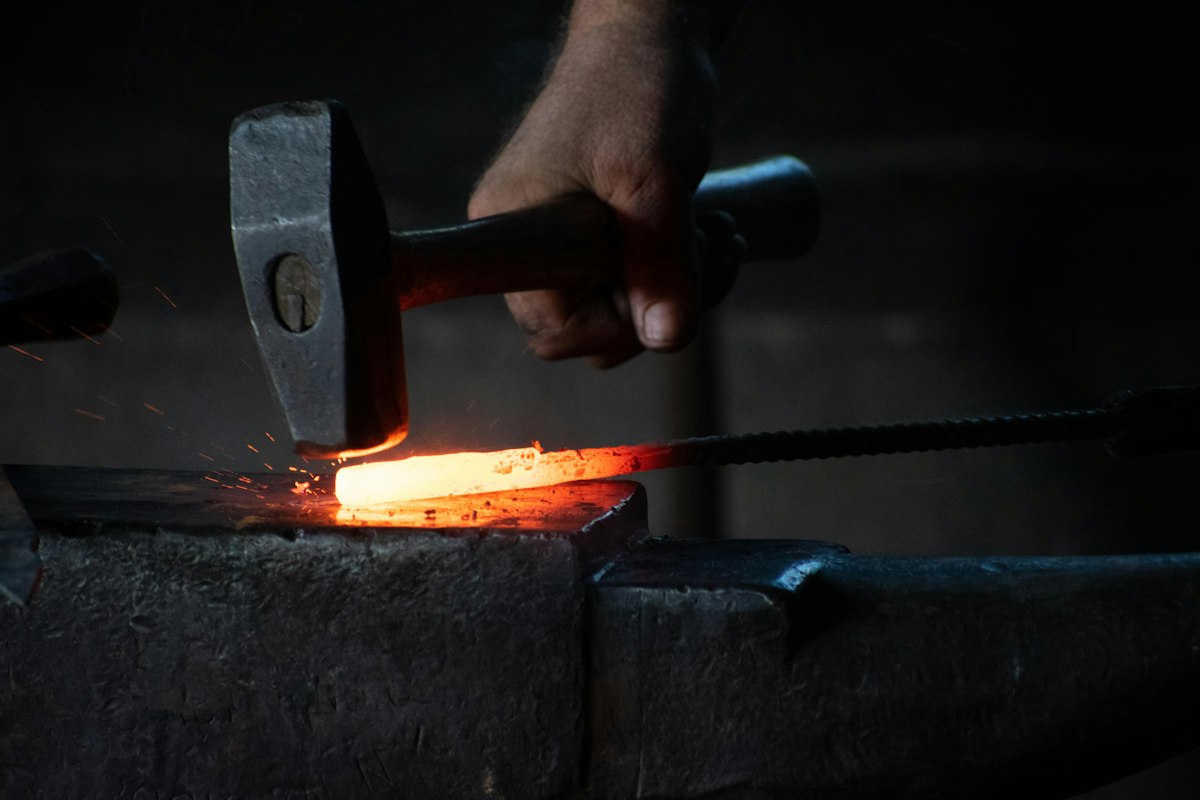
Hot working closes internal voids and breaks up the coarse cast structure of the ingot. Then the die pushes the metal around the shape, so the grain runs along the part instead of stopping at every shoulder. That is why hooks, crankshafts and pressure flanges are forged rather than cast or cut from plate.
The trade-off is tooling and lead time. Closed die parts need a die set before the first piece. Open die and ring rolling need little tooling but leave more stock to machine off.
Open die, closed die, rolled ring or cold forging?
Most forging suppliers specialize in one or two of these. Part weight and yearly quantity decide the process more than anything else, and the process decides which suppliers can quote. The ranges below are typical, not limits.
| Process | What it makes | Typical size | Typical tolerance | Tooling cost | Sensible quantity |
|---|---|---|---|---|---|
| Open die | Shafts, blocks, discs, sleeves and step bars formed between flat or simple dies. | About 5 kg to over 50 t | Machining allowance of a few mm per side | Low. Standard flat and V dies | 1 to a few hundred |
| Closed die | Near-net shapes such as connecting rods, flanges, gear blanks, yokes and levers. Metal fills a cavity cut into the dies. | About 0.1 to 250 kg | About ±0.5 to ±1.5 mm, plus 3 to 7° draft | High. One die set per part number | A few hundred to hundreds of thousands |
| Seamless rolled ring | Rings, bearing races, slewing rings and flange blanks. A pierced blank is rolled out to size. | OD from about 100 mm to several meters | Machining allowance of a few mm | Low. Mostly standard rolls | 1 to thousands |
| Cold and warm forging | Small round parts such as shafts, fasteners, splined parts and gear blanks, formed at or near room temperature. | A few grams to a few kg | About ±0.05 to ±0.25 mm | High. Multi-station tooling | Tens of thousands and up |
Alloys and forging temperatures
Every alloy has its own working window, and not every forge shop can hold it. Name the grade on your RFQ, plus any spec such as ASTM A105, A182 or AMS 4928, so we only match suppliers that already forge it. Temperatures are typical ranges for hot forging.
| Material | Typical forging range | What to know |
|---|---|---|
| Carbon steel (1020, 1045) | 1100 to 1250 °C | The widest supplier base. Shafts, flanges, gear blanks and general hardware. |
| Alloy steel (4140, 4340, 8620) | 1100 to 1230 °C | Heat treated for strength or case hardened. State the hardness or grade class you need. |
| Stainless (304, 316, 17-4 PH, F51) | 1050 to 1200 °C | Narrower working window and more die wear. Common for valves, fittings and flanges. |
| Aluminum (6061, 7075, 2014) | 400 to 480 °C | Heated dies and close temperature control. Suspension, aerospace and structural parts. |
| Titanium (Ti-6Al-4V) | 900 to 980 °C | Worked below the beta transus. Fewer shops, longer lead times and strict process records. |
| Nickel alloy (Inconel 718) | 990 to 1120 °C | High press loads and few capable suppliers. Turbine and oil and gas parts. |
| Brass and copper | 650 to 800 °C for brass | Hot brass forging for valve bodies and fittings. Good surface and low porosity. |
Industries we match forgings for
Each industry brings its own paperwork. Put the spec, test and certificate requirements in your RFQ so we match forging suppliers that already work to them.
Oil and gas
Flanges, valve bodies, wellhead parts and fittings to API and ASTM specs.
Power generation
Turbine discs, shafts, rings and pressure parts.
Heavy equipment
Track links, sprockets, pins, hubs and lifting points.
Automotive and truck
Crankshafts, connecting rods, knuckles, axle parts and gears.
Aerospace
Aluminum, titanium and nickel alloy structural parts and engine rings.
Mining
Wear parts, shafts and large rings for crushers and mills.
Rail
Axles, wheels, couplers and suspension parts.
Hydraulics
Cylinder ends, clevises, rod eyes and manifold blocks.
Rigging and lifting
Hooks, shackles, eye bolts and turnbuckles with proof load records.
How it works
One RFQ from you. A short list of forging suppliers that fit. The order goes straight between you and the supplier.
Send your RFQ
Upload a drawing, STEP file or sketch. Tell us the alloy, part weight, yearly quantity and how you want it delivered. Takes about three minutes.
We match up to 3 suppliers
We check the process your part needs and pick suppliers whose equipment, alloys and weight range fit. You hear from us within 24 business hours.
Suppliers quote you directly
Each supplier contacts you with a quote, often with a die cost and a piece price. You compare and order from the one you choose.
What drives the price of a forging
A forging quote usually has two parts: a one-time die charge and a piece price. These six things move both. When two quotes look far apart, compare them line by line against this list first.
- DiesClosed die work needs a die set per part number. It is paid once, then spread across every piece you order over its life.
- Weight and yieldYou pay for the input billet, not the finished weight. Flash, cropping and machining allowance often add 20 to 40% on closed die parts.
- AlloyMaterial price per kg and how hard the alloy is to form. Titanium and nickel alloys cost more on both counts.
- Heat treatmentNormalizing, quench and temper or solution treatment. Each step adds furnace time and a test.
- Machining after forgingRaw forging, rough machined or finished. Finishing is often a large share of the total part price.
- Testing and paperworkUltrasonic testing, magnetic particle inspection, mechanical tests and 3.1 certificates each add cost.
Have a drawing ready?
Send the short version now and we will ask for anything missing. To give alloy, heat treatment and test requirements up front, use the full RFQ form.
Your files go only to the suppliers we match. Ask for an NDA and nothing is shared until it is signed.
Run a forge shop? Get RFQs that fit your presses.
Tell us your processes, equipment, alloys and weight range. You see a preview of each request before paying for it and talk to the buyer directly. We take no commission on the order.
Questions buyers ask
Something else? Email .
Is ForgingVendor a forge shop?
No. We are a matching service, not a forge shop. We read your RFQ and pass it to forging suppliers whose presses, hammers or ring mills fit the part. You get quotes from them and order from them directly.
Is this free for buyers?
Yes. You pay nothing to send an RFQ or to receive quotes. Forging suppliers pay us for matched requests. Price, payment terms and delivery are agreed between you and the supplier.
Who sees my drawing?
Suppliers first see a short preview with process, alloy, weight, quantity and region. It does not include your name, company or files. Your contact details and files go only to the suppliers we match, 3 at most. If you ask for an NDA, the files stay with us until it is signed.
I am not sure if my part should be open die or closed die. Can I still send it?
Yes. Pick "Not sure" on the form. Give us the part weight, the quantity per year and a drawing or sketch. Those three things usually decide the process, and we match suppliers on that basis.
Can I get machined parts instead of raw forgings?
Yes. Say on the RFQ whether you need the forging as forged, rough machined or finished to drawing. Many forging suppliers machine in house. If they do not, they will tell you in the quote.
How many quotes will I get?
Up to 3. If only one or two suppliers are a real fit for the size, alloy and quantity, we send it to fewer instead of filling the list.
Guides for forging buyers
- Choosing a Supplier
Forging Drawing Approval: Blank Print vs Finished Part
Forging drawing approval explained: the forger draws the blank and you sign it before the die is cut. What the print fixes, what to check and what changes cost.
- Specifications
Forging Test Coupons and Prolongations: What to Specify
A forging test coupon or prolongation proves the part's strength. Learn the types, where specimens come from, how direction matters and what an RFQ must say.
- Specifications
Magnetic Particle Inspection of Forgings: What to Specify
Magnetic particle inspection of forgings explained: what MT finds, how ASTM A275, E1444 and EN 10228-1 differ, and what to write in an RFQ so quotes compare.